

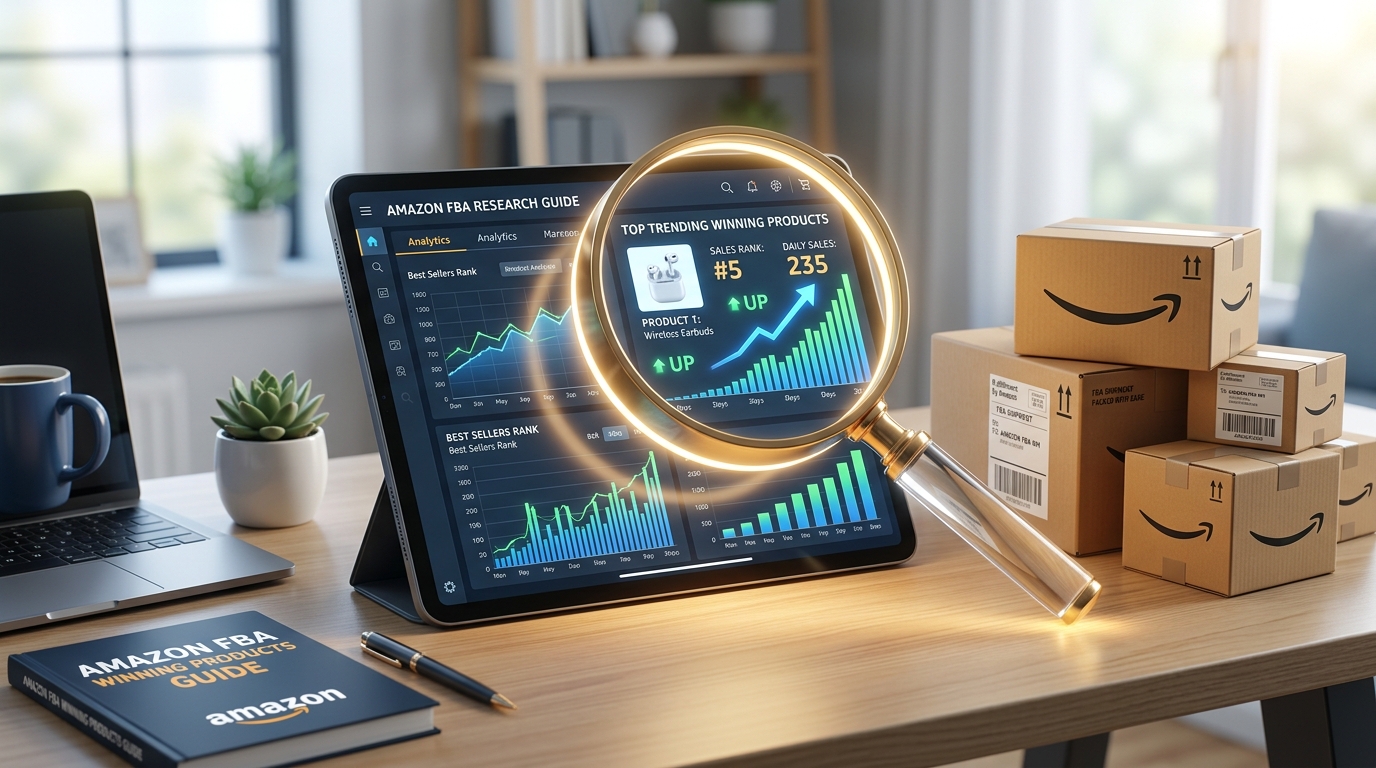
1. The Golden Rules of Product Validation
Most beginners fail on Amazon not because of algorithm changes or high advertising fees, but because they purchase inventory based on emotion rather than cold, hard mathematical data. Before investing a single dollar in sourcing or manufacturing, you must validate market demand using historical data.
Essential Metrics to Look For:
- Consistent Price Stability: The Buy Box price should not have crashed by more than 15% over the past 90 to 180 days.
- Organic Sales Velocity: The top 5 sellers in the subcategory should consistently generate a minimum of 250–400 sales per month each.
- Review Count Barrier: At least 2 or 3 sellers on page 1 should have fewer than 150 reviews, proving that new entrants can rank organically.
- Weight & Dimension Limits: Aim for products under 2 lbs (approx. 900g) that fit inside standard small or large standard-size tiers to minimize Amazon FBA pick & pack fees.
💡 Pro Tip from FBA Master:
Never enter a niche where the top 3 sellers control more than 70% of the total monthly sales volume. That indicates extreme brand loyalty or dominant review moats that are cost-prohibitive to disrupt with PPC.
2. Calculating True Net Margins Before Sourcing
A product selling for $35 that costs $7 to manufacture may look like an easy 5x markup, but Amazon fees quickly eat into margins if you don't calculate Landed Costs accurately:
- Manufacturing & FOB Cost: The base unit cost from the factory.
- Inbound Freight (DDP): Sea freight ($1.50–$2.50/kg) or air freight ($6–$8/kg) including customs duty.
- Amazon Referral Fee: 15% of the total retail selling price ($5.25 on a $35 item).
- FBA Pick & Pack Fee: Typically $3.80 to $6.50 depending on exact ounces and dimensions.
- PPC Cushion: Reserve at least 10% to 15% of your target selling price for launch advertising.
Your goal is a minimum 25% to 35% Net Profit Margin and 100%+ ROI after all Amazon fees and return cushions are accounted for.
3. The Exact Tools to Use
You don't need a dozen expensive subscriptions to execute world-class product research. Stick to these two industry standards:
- Keepa: For analyzing 90-day and 365-day sales rank drops, price fluctuation, and Buy Box rotation.
- Helium 10 (Black Box & Cerebro): For discovering uncompetitive search volume keywords and running reverse-ASIN competitor audits.
4. Final Pre-Launch Checklist
Before wiring funds to your supplier, verify that the ASIN is not patented, does not violate any trademarks, and is not classified as Dangerous Goods / Hazmat on Amazon Seller Central.